

„Today, November 26, 2026, the prosecutor in charge from the Criminal Investigation Section of the Prosecutor’s Office attached to the High Court of Cassation and Justice has initiated criminal proceedings against a member of the Romanian Parliament for the offense of public incitement,” the Prosecutor General’s Office announced in a statement.
The Origins of George Simion’s Criminal Case
The case was opened on March 10, 2025, after prosecutors initiated an investigation *ex officio* (on their own motion) following statements made by the AUR president the previous evening.
On March 9, 2025, the Central Electoral Bureau rejected Călin Georgescu’s presidential candidacy. The decision triggered protests in the center of the capital, during which clashes occurred between demonstrators and law enforcement.
In this context, George Simion posted a video on Facebook in which he asserted that those who had allegedly committed what he termed a „coup d’état” should be „skinned alive in the public square.” Subsequently, the AUR leader claimed that his statement was meant figuratively and referred to the elimination of privileges and special pensions, as well as the removal—through peaceful and democratic means—of those he held responsible.
Initially, prosecutors opened a criminal case *in rem*—meaning they conducted an investigation into the act itself. More than a year and eight months after the statements in question were made, George Simion has been formally named a defendant.
What penalty does the law prescribe for public incitement?
The offense of public incitement is defined under Article 368 of the Criminal Code.
In its basic form, inciting the public—whether through statements, written messages, or other means—to commit criminal offenses is punishable by imprisonment for a term of three months to three years, or by a fine.
For this offense to be established in its basic form, it is not required that the act being incited was actually committed.
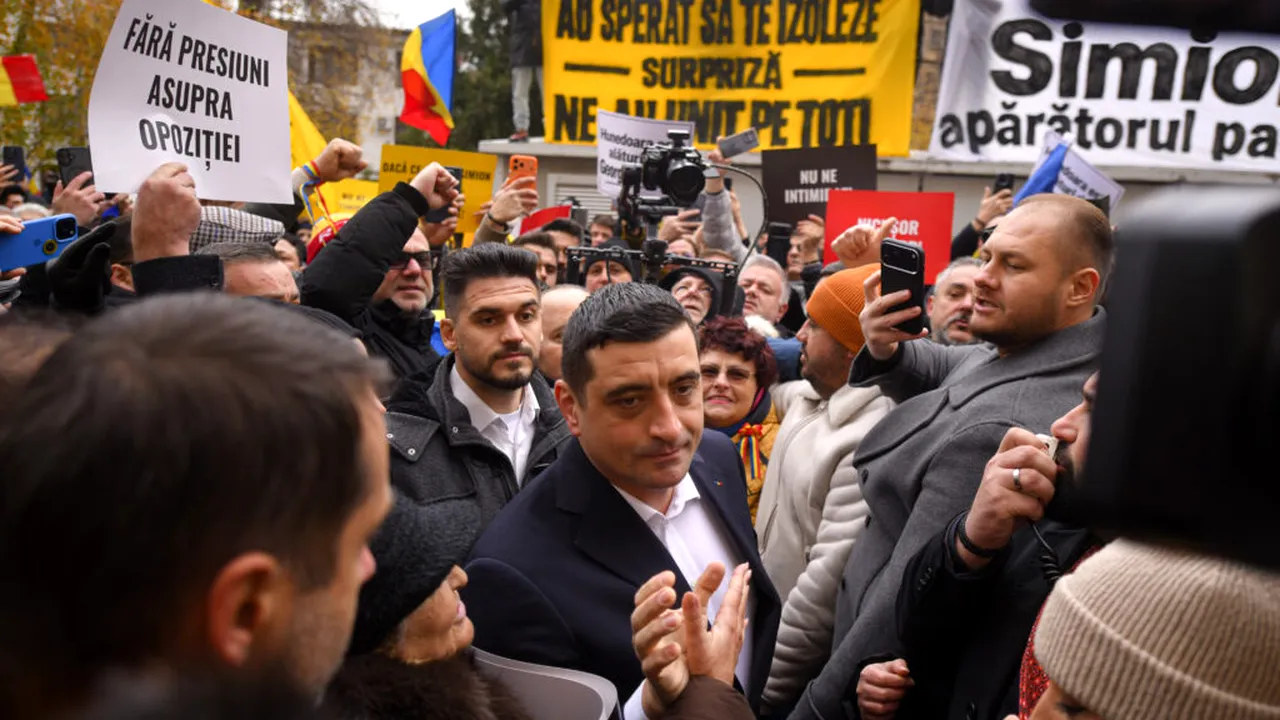
George Simion claims the case is politically motivated.
The AUR leader rejected the accusations and, upon leaving the Prosecutor General’s Office, asserted that the investigation is politically motivated. He further linked the case to his party’s refusal to support the investiture of the Adrian Veștea government in June 2026.